
How to Analyze Two-Component Reaction Depending on Component Concentrations
Curing kinetics with different epoxy/amine ratios
DSC Two-Component Curing System
This guide is a first part of the serie of user guides about DSC two-component curing systems:
Part 1. How to analyze two-component reaction depending on component concentrations (this guide)
Contents
Influence of Epoxy/Amine Ratio on the Curing Rate
Create Kinetic Model for Different Heating Rates and Fixed Epoxy/Amine Ratio
Prepare Project for Analysis with Different Concentrations
Create Kinetic Model for One Heating Rate and the Different Epoxy/Amine Ratios
Introduction
The rate of two-component reaction A+B→C depends not only on temperature, but also on the concentrations of reacting compounds A and B. Changing of the initial concentration ratio leads to the changing of the reaction rate and reaction enthalpy.
For each fixed concentration ratio, the kinetic analysis of thermal analysis measurements can be done according to the Arrhenius equation:
The result is the kinetic triplet with the apparent values of pre-exponential factor A, reaction type f(α) and activation energy Ea. Reaction type can contain apparent values of parameters like reaction order n, order of autocatalysis m, Pre-Exponential factor of autocatalysis Kcat etc.
For other fixed concentration ratio kinetic analysis provides the kinetic triplet with other kinetic parameters. We can create the kinetic model where the apparent kinetic parameters are the functions of initial concentrations.
In this “How To”: The common kinetic model depending on both temperature and concentrations will be created.
Influence of Epoxy/Amine Ratio on the Curing Rate
Curing reactions are autocatalytic and contains parameters for autocatalysis.
The curing reaction of Epoxy-Amine system can be described by the Arrhenius equation with autocatalytic reaction type of Kamal-Sourour. Here the simplified Kamal-Sourour reaction (https://kinetics.netzsch.com/en/f-a-q/kamal-sourour-equation-in-kinetics-neo ) Cn will be used with the same activation energy for n-th order reaction and for autocatalytic reaction.
Here the parameters A, n, Kcat, Ea are the functions of initial concentrations of reactants.
Load the Sample Data Project
Start Kinetics Neo. Click on Open in the menu on the left side, then select Samples.
Select directory DSC_Epoxy+Amine_Concentrations and data file DSC_Epoxy+Amine_Concentrations_Data.kinx2
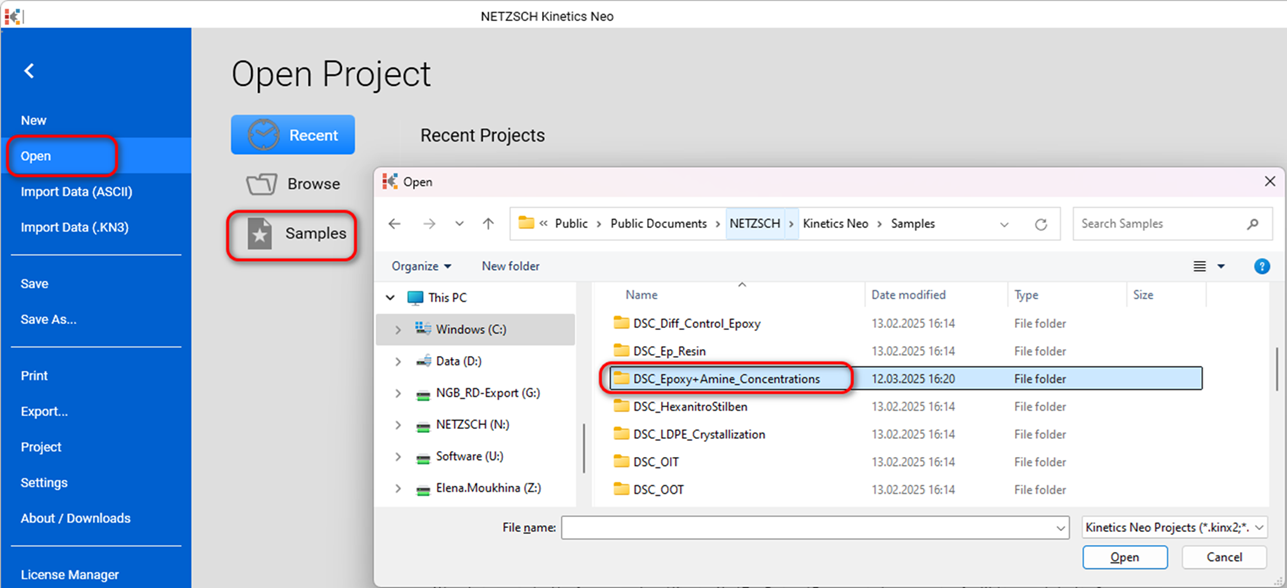
Open File with data DSC_Epoxy+Amine_Concentrations_Data.kinx2. The exothermal curing process is presented here as negative peaks.
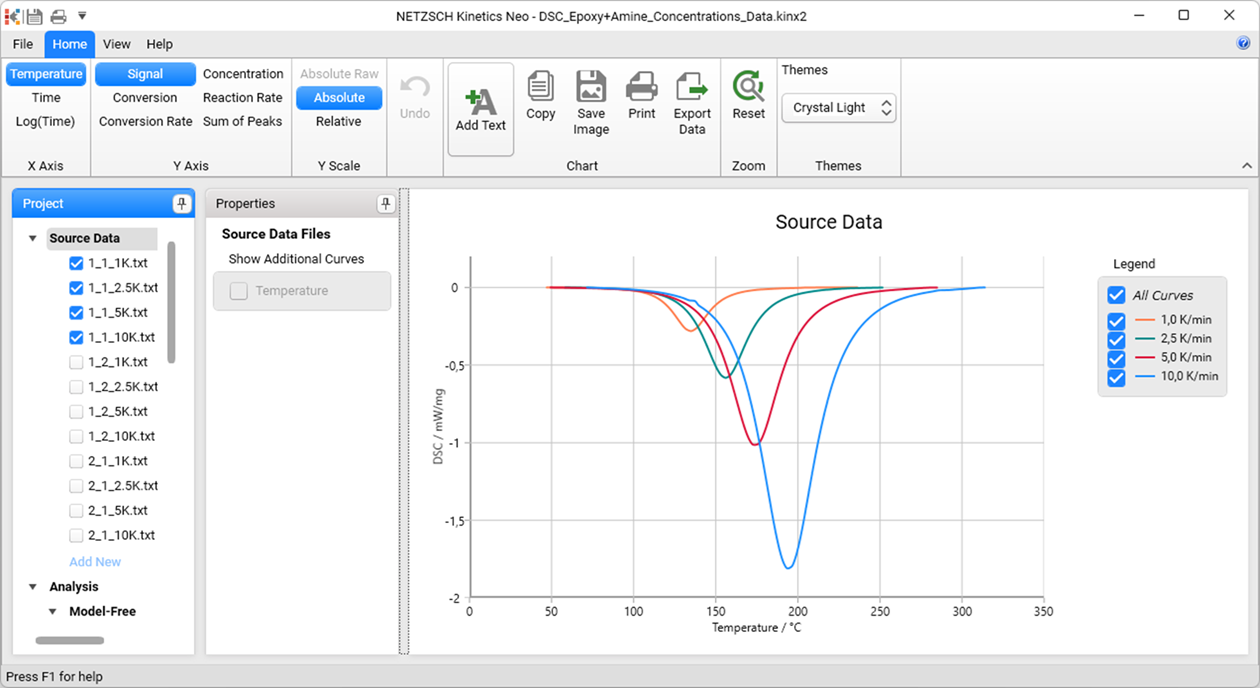
This kinetic project contains 12 data sources. The first 4 of them are marked and are shown on the chart. They are the DSC measurements where the concentrations epoxy/amine is 1:1, what is noted in the names of data sources.
Next 4 measurements with names starting “1_2” have the concentrations epoxy/amine is 1:2, and the last four measurements starting with “2_1” have the concentrations of epoxy/amine 2:1.
Create Kinetic Model for Different Heating Rates and Fixed Epoxy/Amine Ratio
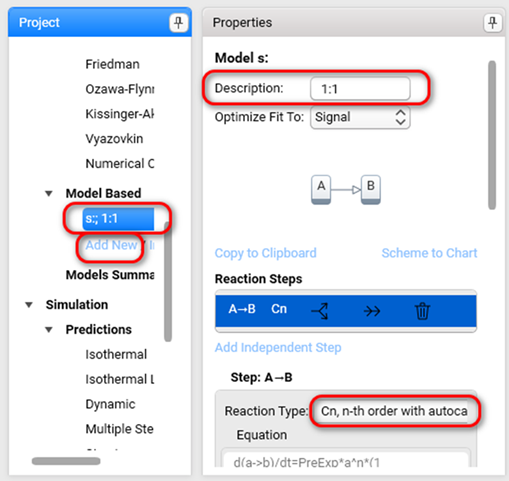
In Model Based Section of Project panel click on Add New to create the new model. Then in Properties Panel add Description “1:1” and select Cn for Reaction Type A→B:
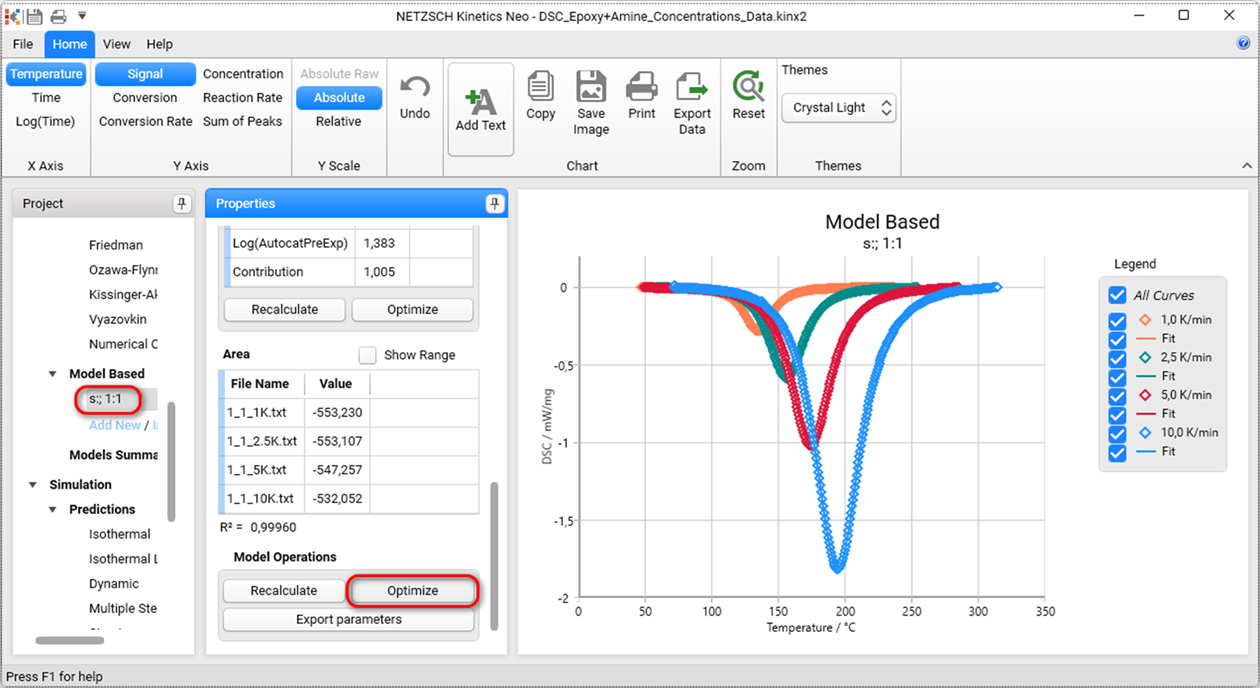
In Properties panel scroll down to Model Operation section and click on Optimize to have kinetic model for fixed concentration ratio 1:1.
Prepare Project for Analysis with Different Concentrations
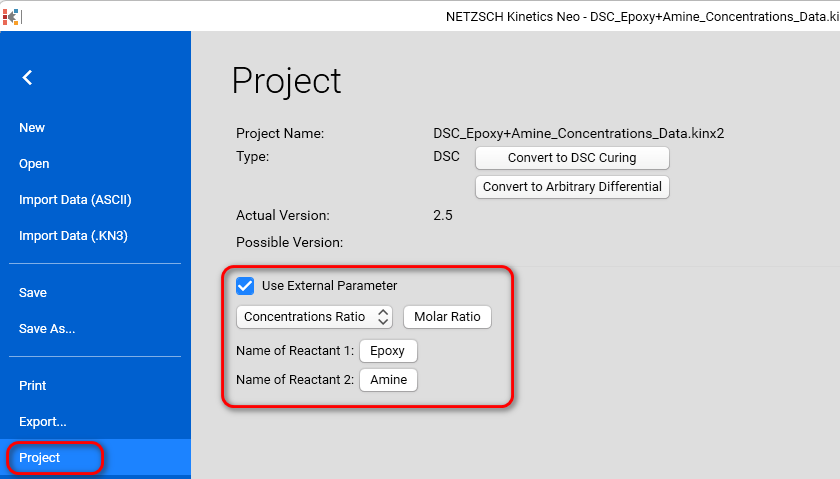
For the current project Go to File-Project and check Use External Parameter.
Select Concentration Ratio, type Molar Ratio for Units, and type Epoxy and Amine for reactant names:
In the Source Data show all Data Sources.
Select a data source file containing 1_2 in the file name and set Concentrations to 1:2.
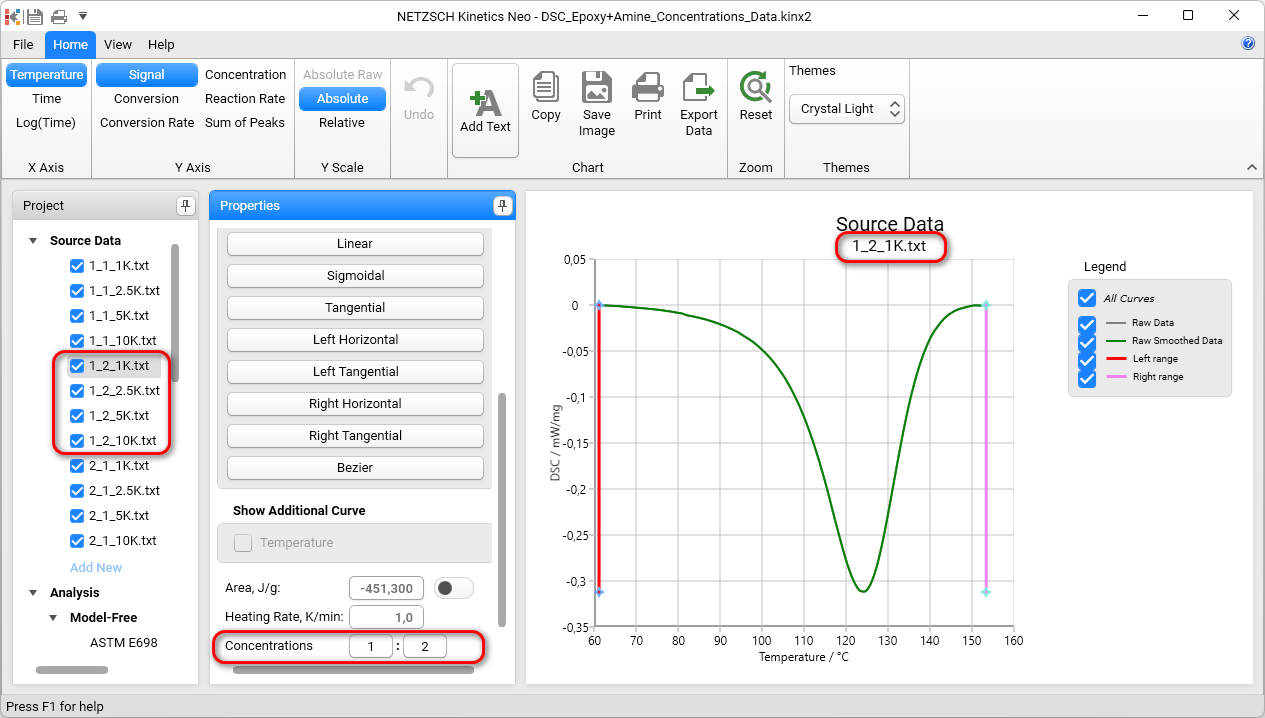
Repeat this for all data source files named 1_2.
For the files with 2_1 set concentrations to 2:1.
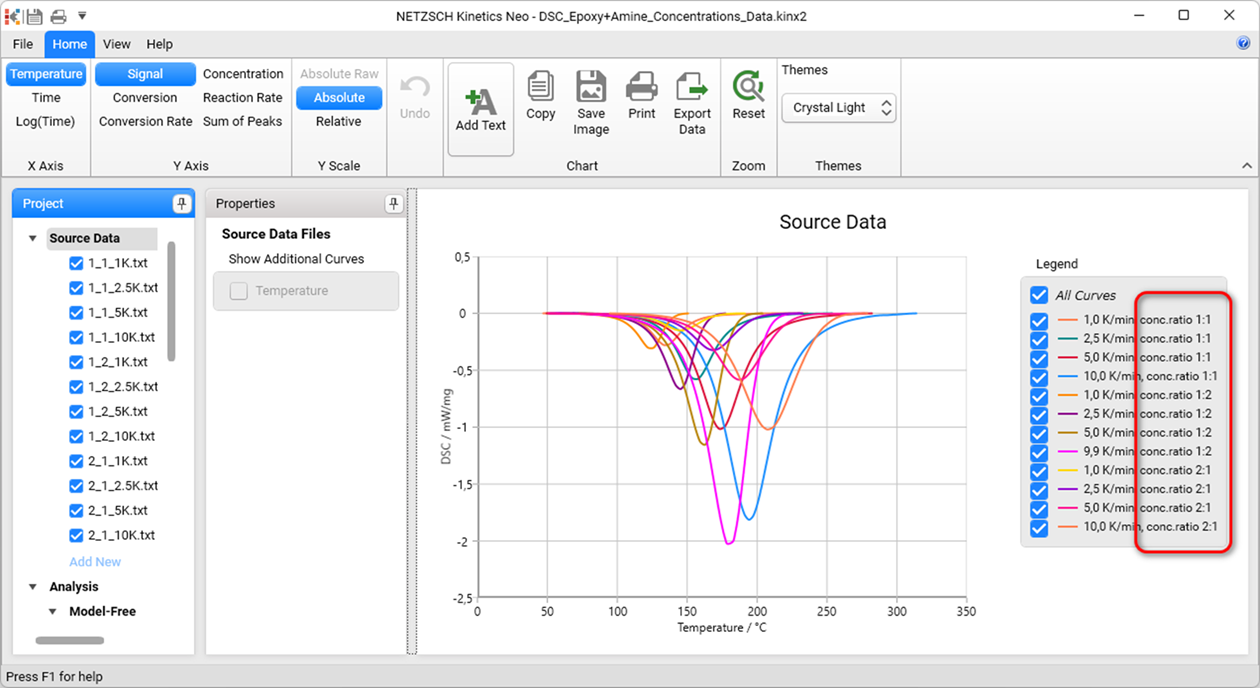
Select Source Data to show all experimental curves. The legend must contain concentration ratio for each measurement.
Create Kinetic Model for One Heating Rate and the Different Epoxy/Amine Ratios
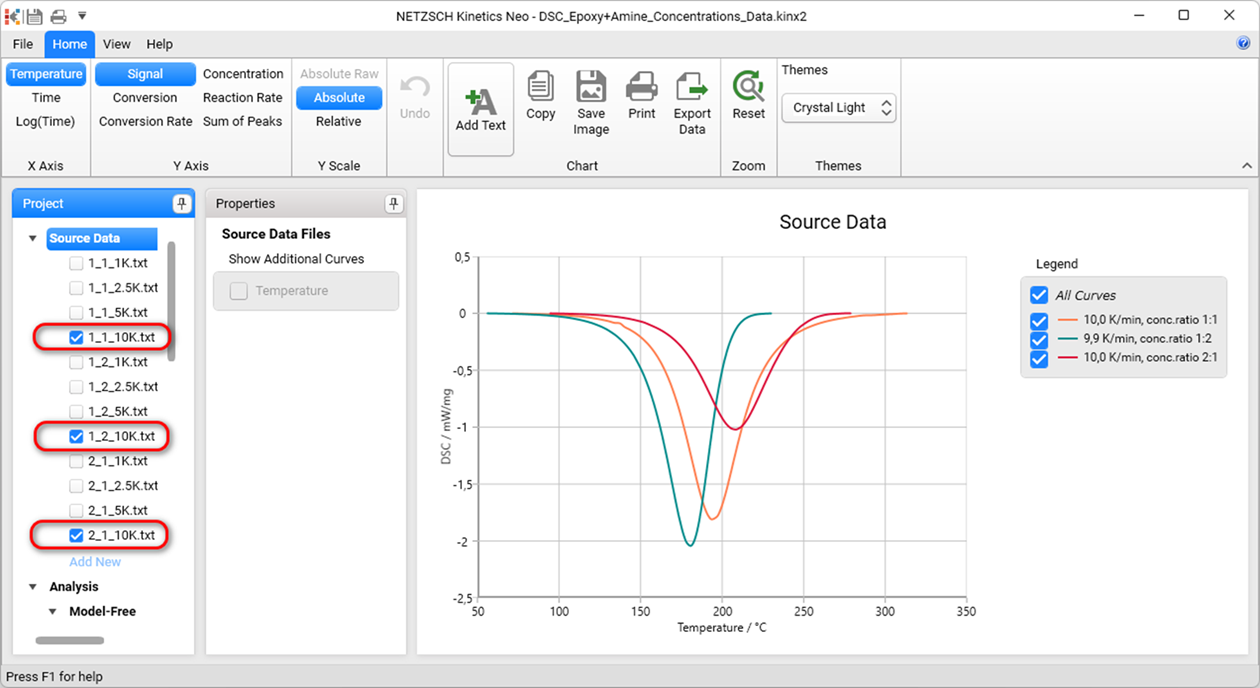
In Data Source select only measurements with heating rate 10K/min. Unselect the measurements with other heating rates.
Create the copy of model 1:1 by right mouse click.
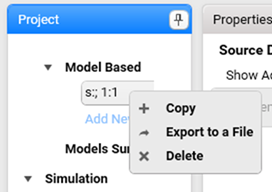
Set the name of new model 10K/min and click on checkbox Depends on Concentrations:
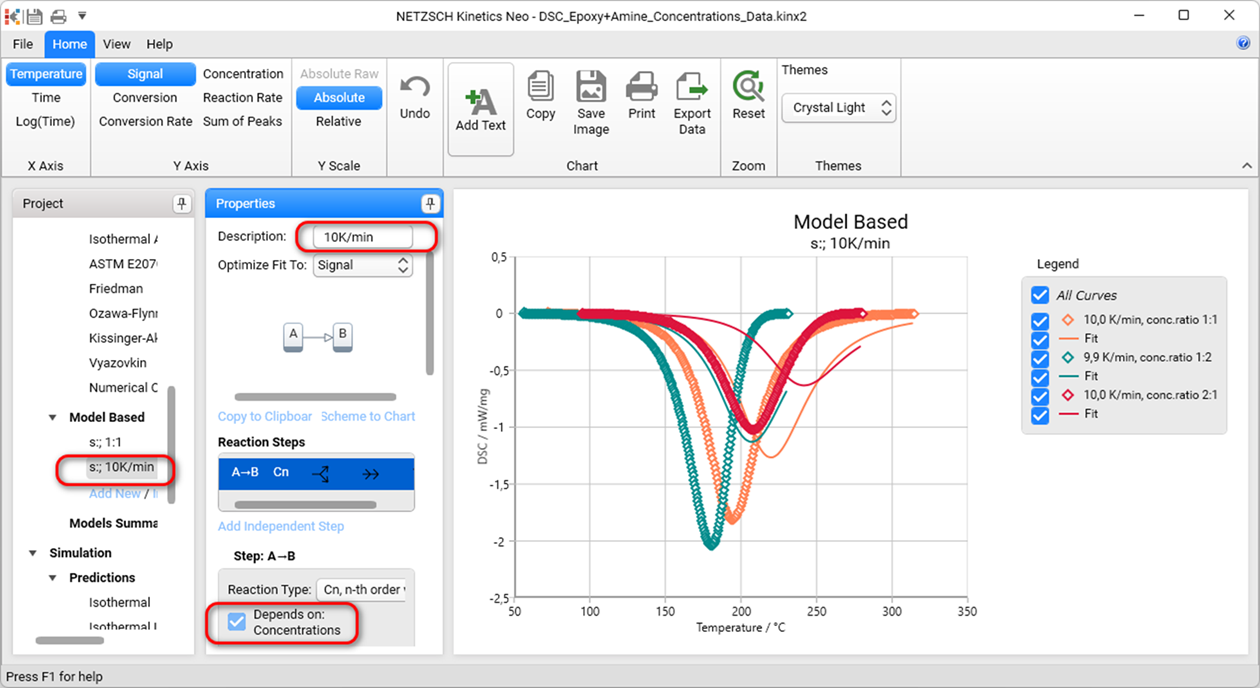
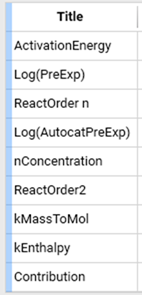
Now the number of Parameters are increased. We have the reaction order of the second reactant, Parameter kMassToMol is responsible for recalculation of Mass Ratio to Mol Ratio, kEnthalpy helps to calculate the changing of Enthalpy with changing of concentrations, and nConcentration is responsible for moving of the whole curve (like for kinetics at different pressures):
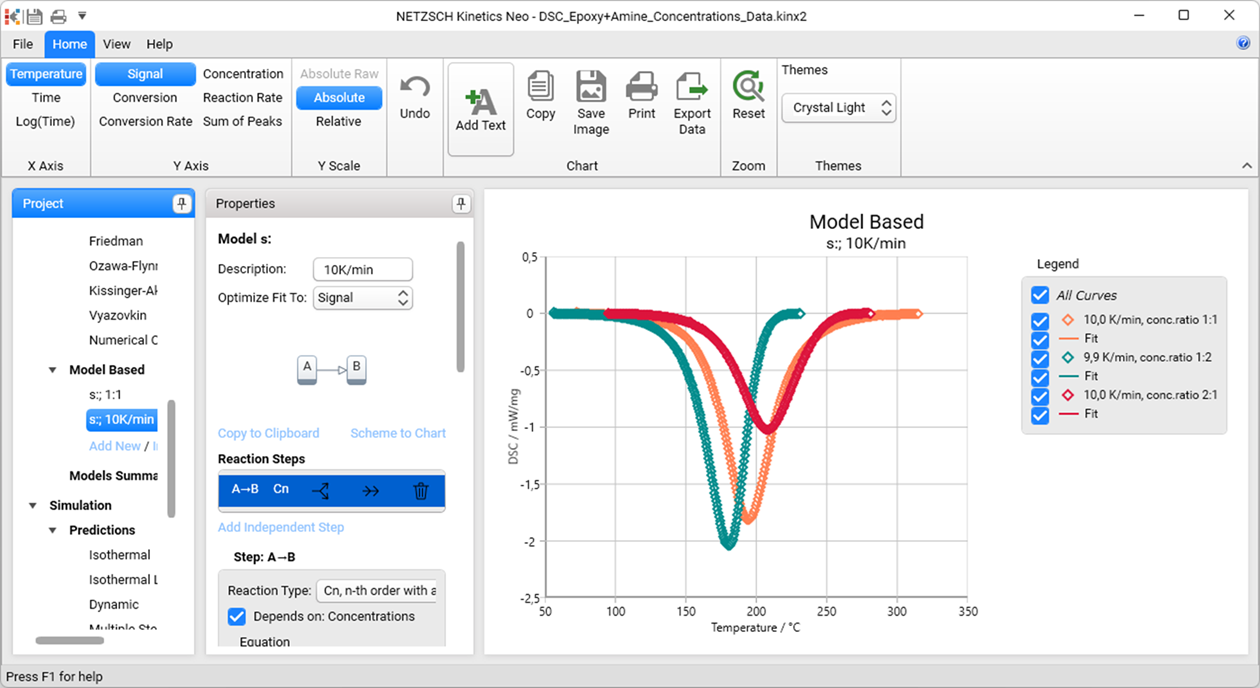
In Properties panel scroll down to Model Operation section and click on Optimize to have kinetic model for fixed heating rate 10K/min and different concentration ratios:
Create Kinetic Model with Dependence on Concentration Ratio
In the Source Data show all Data Sources.
Create the copy of model 10K/min by right mouse click like it was done before.
Set the name of new model: All measurements.
For optimization of parameters in Properties Panel go to Model Operation section and click on Optimize:
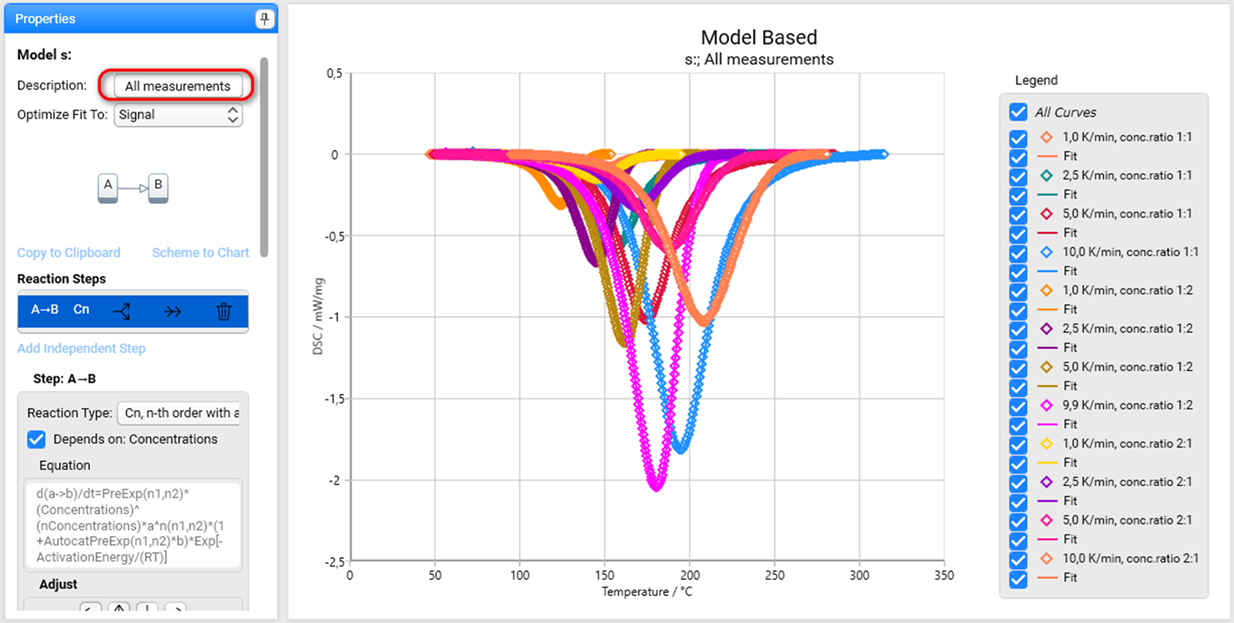
Here R² is 0.999.
This kinetic model can describe the dependence of curing rate on both temperature and initial concentrations of reactants. This method can be used for both mol ratio or mass ratio as input data.
This model can be used now for the prediction of the reaction rates for given temperature profile and at different concentration ratios of reactants. If the model is based on measurements with different mol ratios, then the prediction can be done for new mol ratio. If the model is based on different mass ratios, then the prediction can be done for new mass ratio for reactants.