
Degree of Conversion
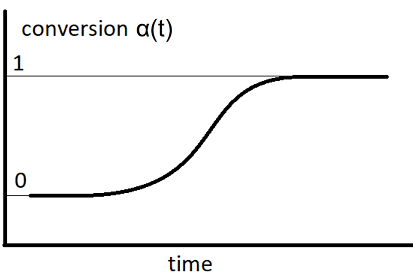
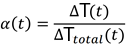
Degree of conversion α in chemical kinetics is the dimensionless time-dependent parameter of kinetic process like chemical reaction or crystallization, showing what part of it is already finished.
Degree of conversion is equal to 0 before reaction started and equal to 1 after reaction completely finished.
Degree of conversion is calculated as the ratio of the current partial effect of reaction to the total effect of reaction.
Thermogravimetry (TG, TGA)
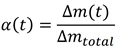
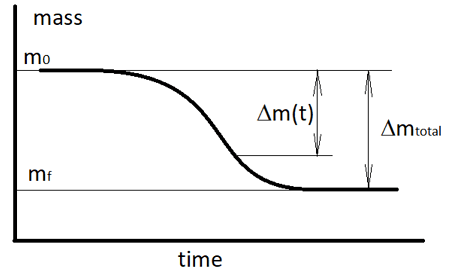
In thermogravimetry the degree of conversion is the ratio of the current mass loss to the total mass loss. It is used for study of decomposition reactions.
Differential Scanning Calorimetry (DSC)
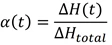
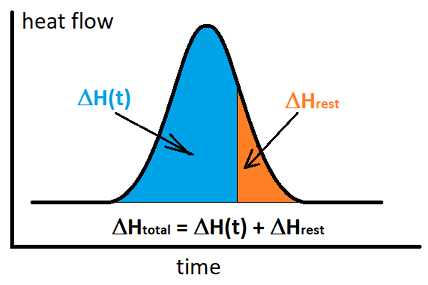
In Differential Scanning Calorimetry the degree of conversion is the ratio of the current partial peak to the total peak area. It is used for study of endothermal or exothermal processes like curing, cross-linking, crystallization, or decomposition.
Dilatometry (DIL)
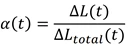
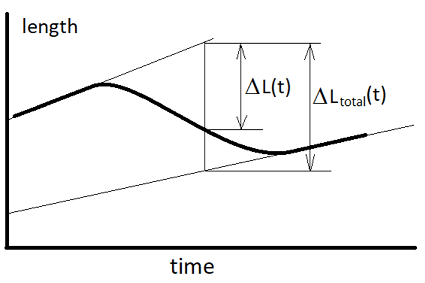
In Dilatometry the degree of conversion is the ratio of the current length change to the total length change. In experiments with changing temperature the thermal expansion must be removed from experimental data before the evaluation of length change. In Dilatometry the degree of conversion is used for study of sintering processes.
Rheometry
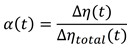
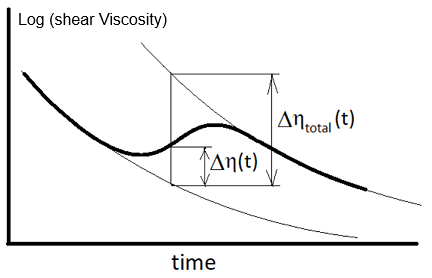
In Rheometry the degree of conversion is the ratio of the logarithm of current viscosity change to the logarithm of total viscosity change. In experiments with changing temperature the temperature-dependent baseline must be removed from experimental data before the evaluation of viscosity change. In Rheometry the degree of conversion is used for study of curing processes.
Accelerating Reaction Calorimetry (ARC)
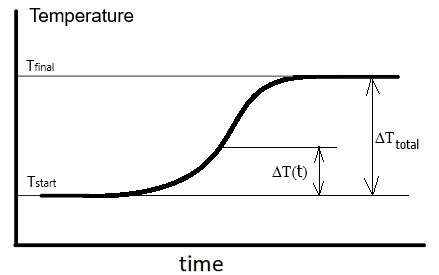
In Accelerating Reaction Calorimetry (ARC) the degree of conversion is the ratio of the current temperature increase to the total temperature increase. It is used for study of reactions with self-heating.
For multi-step reactions the degree of conversion calculated for different thermoanalytical methods, could be different. For example, α(t) of thermogravimetric measurement could differ from α(t) of DSC data for the same decomposition process.